Small kidney stones often pass out of the body on their own. As long as they don’t cause severe pain or complications, treatment isn’t necessary. Larger kidney stones usually need to be treated. Depending on how large the kidney stones are and where they’re located, they can be destroyed or removed using an endoscope (a flexible tube with a light and camera at the end of it).
Most kidney stones with a diameter of less than 5 millimeters, and about half of all stones between 5 and 10 millimeters, pass out of the body on their own. These smaller kidney stones are often flushed out in the urine after one or two weeks.
If it’s thought that a stone will probably be flushed out without any treatment, doctors generally recommend waiting. If the kidney stone causes pain as it travels through the ureter (tube that runs from a kidney to the bladder), painkillers like ibuprofen or diclofenac can provide relief.
Larger stones that cause problems will usually have to be broken up or surgically removed. That needs to be done if The stone isn’t passed within four weeks, There are complications, It causes severe colic (pain), or The stone is larger than 10 millimeters in diameter.
Uric acid stones can sometimes be dissolved using medication.
Alpha blockers are believed to make it easier for the stones to pass out of the body. They relax the muscles in the lower part of the bladder They have not been approved for the treatment of kidney stones. But particularly the alpha blocker tamsulosin is sometimes used off-label.
Alkaline citrate salts and sodium bicarbonate increase the pH level of the urine, and allopurinol lowers the level of uric acid. Drinking a lot of water helps to increase the effect of the medication: The more urine there is, the better the uric acids can dissolve.
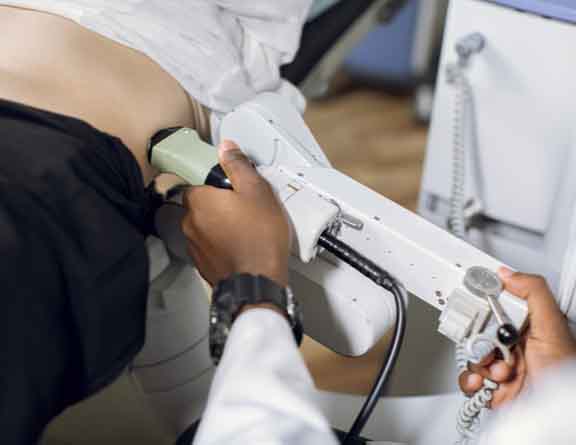
Ultrasound shock wave therapy :
Shock wave therapy is especially suitable for kidney stones that are smaller than 20 millimeters in diameter. If the stones are in the upper third of the ureter, they shouldn’t be any bigger than 10 millimeters, though
Ureterorenoscopy :
URS is used for stones that are bigger than 10 millimeters in diameter and are in the middle or lower third of the ureter. Kidney stones up to 20 millimeters in diameter are often removed using URS.
Percutaneous nephrolithotripsy :
Endoscope is moved into the renal pelvis or the kidney through a small cut made on your back. There the stones can also be either broken up mechanically or with a laser. Tiny forceps are used to remove the pieces of the kidney stones. This method is mainly used to treat kidney stones greater than 10 millimeters in diameter