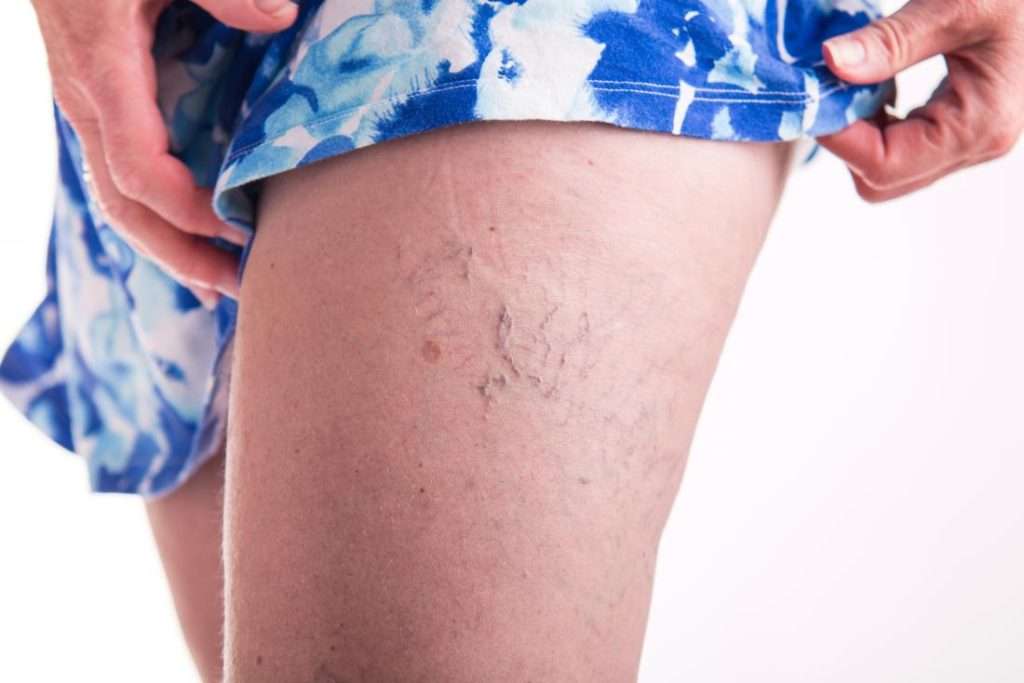
Varicose veins occur when veins aren’t functioning properly
When these valves fail, blood begins to collect in the veins rather than continuing toward your heart. The veins then enlarge. Varicose veins often affect the legs. The veins there are the farthest from your heart, and gravity makes it harder for the blood to flow upward.
Pregnancy
Menopause
Age over 50
Standing for long periods of time
Obesity
Family history of varicose veins
Symptoms
Visible enlarged veins
Pain in the legs
Heaviness
Swelling
Itchiness
Blackening of the skin
Ulcers
Let's Schedule Your Appointment
Diagnosis
Physical examination in sitting and standing positions to identify the varicose veins.
Duplex scan: It is used to identify the presence of incompetent(allows back flow of blood) veins in the leg. It can identify the presence or absence of
Saphenofemoral junction incompetence
Saphenopopliteal junction incompetence
Perforator incompetence
Venogram can also be used.
Prevention
Avoid standing in the same place for prolonged periods
Exercises to improve blood flow
Compression stockings
Treatment
Trendelenberg procedure: in this surgert doctors puts an incision in the thigh and ligate and remove the defective vein from the body. Perforators are dealt by ligation.
Currently, a wide variety of minimally invasive treatment options for varicose veins are available. These include:
Sclerotherapy, using a liquid or foam chemical injection to block off a larger vein
Microsclerotherapy, using a liquid chemical injection to block off smaller veins
Laser surgery, using light energy to block off a vein
Endovenous ablation therapy, using heat and radiofrequency waves to block off a vein
Endoscopic vein surgery, using a small lighted scope inserted through a small incision to block off a vein.